Home / Products / Roller Blinds
One bracket, three fabrics: rollers done the Kuils River way
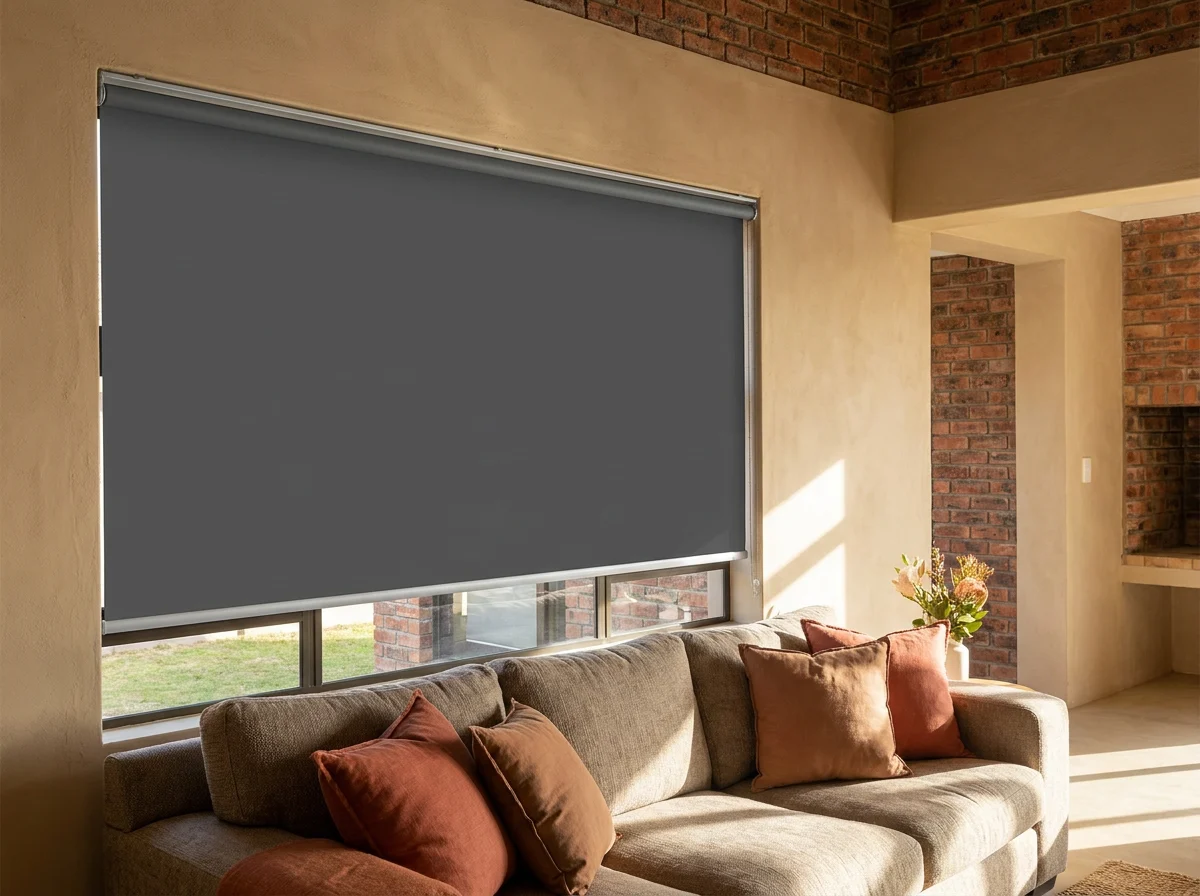
Sunscreen for the view, blockout for the sleep, or both stacked on a double bracket. Every roller is cut to your window and specified for the direction it truly faces — whether the frame went in last month or in 1987.
Pick the job before the fabric
A roller blind is a simple machine asked to do three very different jobs, and the mistake most people make is choosing a colour before choosing the job. Decide first what the room needs — glare tamed, darkness delivered, or both by turns — and the fabric almost picks itself.
Sunscreen mesh
Woven at 3%, 5% or 10% openness. Cuts glare and UV while the garden stays readable through the weave. West-facing rooms usually step up a grade to hold that long, low winter sun.
Blockout
A coated fabric that turns a 5am summer sunrise into parent-approved darkness. First call for bedrooms, shift-sleepers and the TV wall that fights reflections.
Double roller
Sunscreen and blockout sharing one bracket, operated separately. Filtered daylight through the afternoon, full dark at bedtime — the same window, both moods.
Controls
Chain with a safety tensioner, spring assist, or a quiet motor on remote or app — the sensible route for double-volume glass and anything a small child can reach.
Old walls and new walls don't take the same screw
Around Zevenwacht and the younger clusters — Rouxville, Haasendal, Kleine Wingerd — the plaster is fresh and a bracket goes in exactly where the book says it should. In Scottsville or Amandelsig the story is different: frames hung in the eighties have settled, reveals are seldom perfectly square, and a face-fixed cassette often sits straighter than anything forced inside the recess. That's a judgement made at the window, not from a price list, and it's half the reason the measure happens at your house.
Width matters as much as age. A three-metre slider is too much fabric for one hand chain to manage gracefully, so big spans either split into two blinds with a neat central join or run as motorised linked rollers on a single quiet tube. The glare load shifts street by street too — a bare, sun-baked estate phase and a tree-softened older road rarely land on the same mesh grade, even with identical windows.
The estate plan says north. The plaster says 1987. The tape measure settles both arguments before we promise you anything.
Specifying rollers, Kuils RiverWhat the visit actually settles
- The true compass orientation of every window, confirmed on site
- A mesh grade per room, never one grade stamped across the house
- Bracket and fixing matched to the age and squareness of the wall
- Where a wide span should become two blinds — or one motor
- Child-safe operation wherever small people sleep or play
What a roller costs in Kuils River
Rollers are quoted per square metre, installed, and the fabric plus the control decide the number. Manual, on a chain or a spring, in blockout, sunscreen or a light-filtering weave: R1,000 to R1,600 the square metre. Motorised, the same window runs R2,500 to R3,800 — motor, control and the pairing done on fitting day included.
A small pane is billed at a minimum instead of by area, because the tube, the brackets and the fitting time hardly change with size. And a band is not a quotation: every window in your house gets its own number at the free measure, in writing, before anything is made.
Ready to measure your windows?
The measure costs nothing, the quote is written out per window, and you're under no obligation.