Home / The Guide
The hills are on the wrong side
Kuils River sits at the foot of the Bottelary Hills — and those hills are to the east, above the town on the Stellenbosch side.1 They make a lovely morning. They take nothing at all off the afternoon. This is a free, sourced walk through a Kuils River house, room by room, and what we would put in each one.
Everything below is in a single PDF if you would rather save it than scroll.
Start with the one bit of geography that actually matters
Every suburb has a story it tells about itself. Kuils River's is a good one: the town takes its name from the kuile, the pools in the river beside it, and the site was a Dutch East India Company refreshment post from 1680, first called De Boss and then de Kuijlen. A railway station arrived in 1862 and the place became a municipality on 4 December 1950. It sits 25 km east of Cape Town and 20 km west of Stellenbosch, at the entrance to the Winelands.1
For shading, one line of that matters more than the rest. The high ground here — the Bottelary Hills, a low granite range on the north-western edge of the Stellenbosch district, with Kuils River sitting at its foot — lies to the east.2
Think about what that means for a day. Hills on the eastern side shorten your morning slightly and shade nothing after noon. To the west there is nothing between your lounge window and the horizon but flat, open ground. So the sun sets in full view, low and hard, for the whole length of a Cape summer evening. In a suburb with a mountain to the west, the afternoon ends early. Here it does not end at all — it just gets lower and more annoying.
That is the through-line of everything below. Three numbers back it up, and you can check the arithmetic. Kuils River sits at about 33.94° south, so solar noon puts the sun at roughly 79.5° at the December solstice, 56° at the equinoxes and 32.6° at the June solstice.3 High and easy at midday; low and unstoppable at the end of the day.
Room oneThe west lounge, which is the whole argument
In an established Kuils River house this is usually a wide picture window or a sliding door onto the garden. In an estate house it is more likely to be a stacker run or a corner of frameless glass. Either way it behaves the same after four o'clock.
Here is the bit that gets glossed over almost everywhere else. An interior blind on west glass does not stop heat. The sun is through the pane before the fabric ever sees it: the glass takes the energy first, the fabric second, and the room inherits both of them by suppertime. That is genuinely useful against glare. It is not a heat solution on a big west opening, and telling you it is would be the easy sale rather than the right one.
Heat has to be intercepted outside the glass. Three ways, in the order we normally put them on a Kuils River quote:
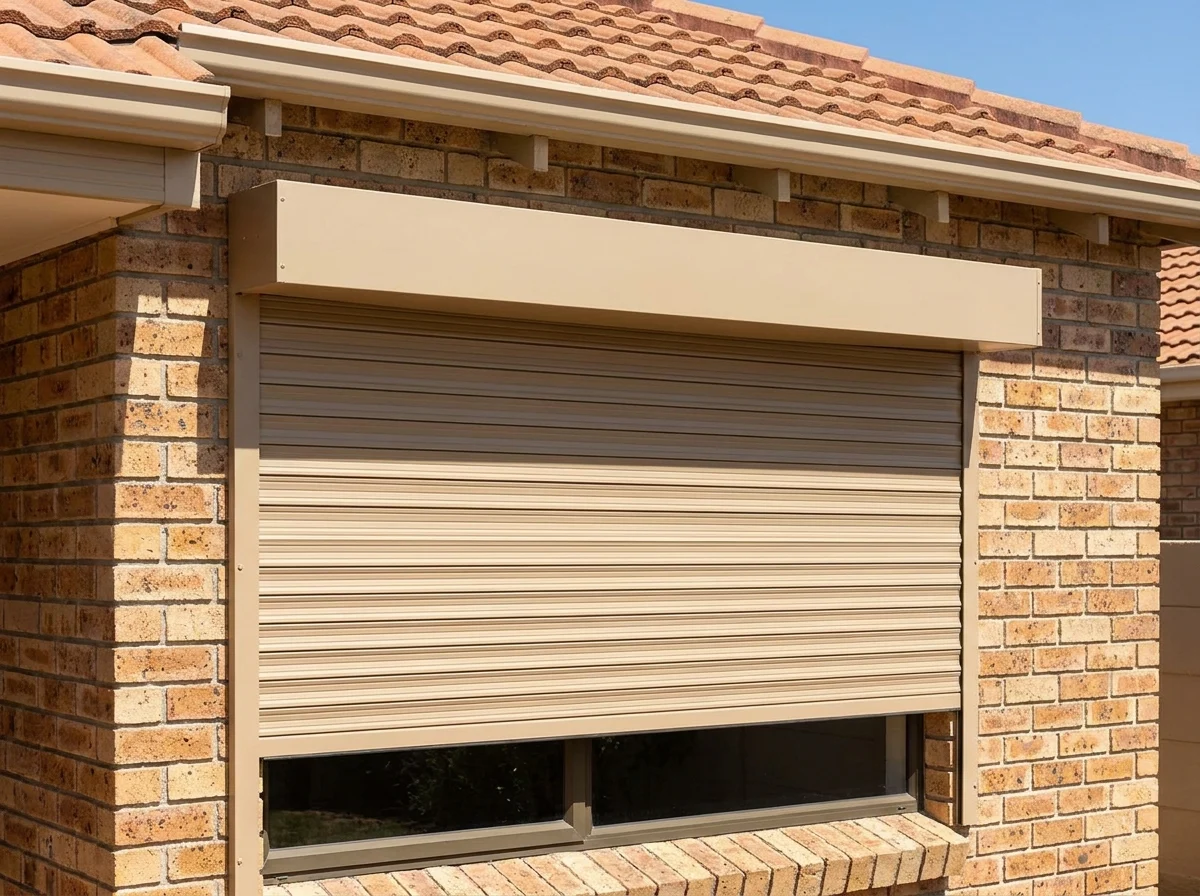
- Roller shutters. Aluminium slats, rigid rather than fabric, coming down outside the opening from a box at the head — the strongest heat, glare and dark control we fit, and the steadiest in wind. Half-lowered they close off the upper part of the glass, which is where the low sun arrives from, while the sill stays open. Worth saying out loud: the job here is sun, heat and light. Security rating is not part of it. That is another product entirely, on its own quote, if you want one.
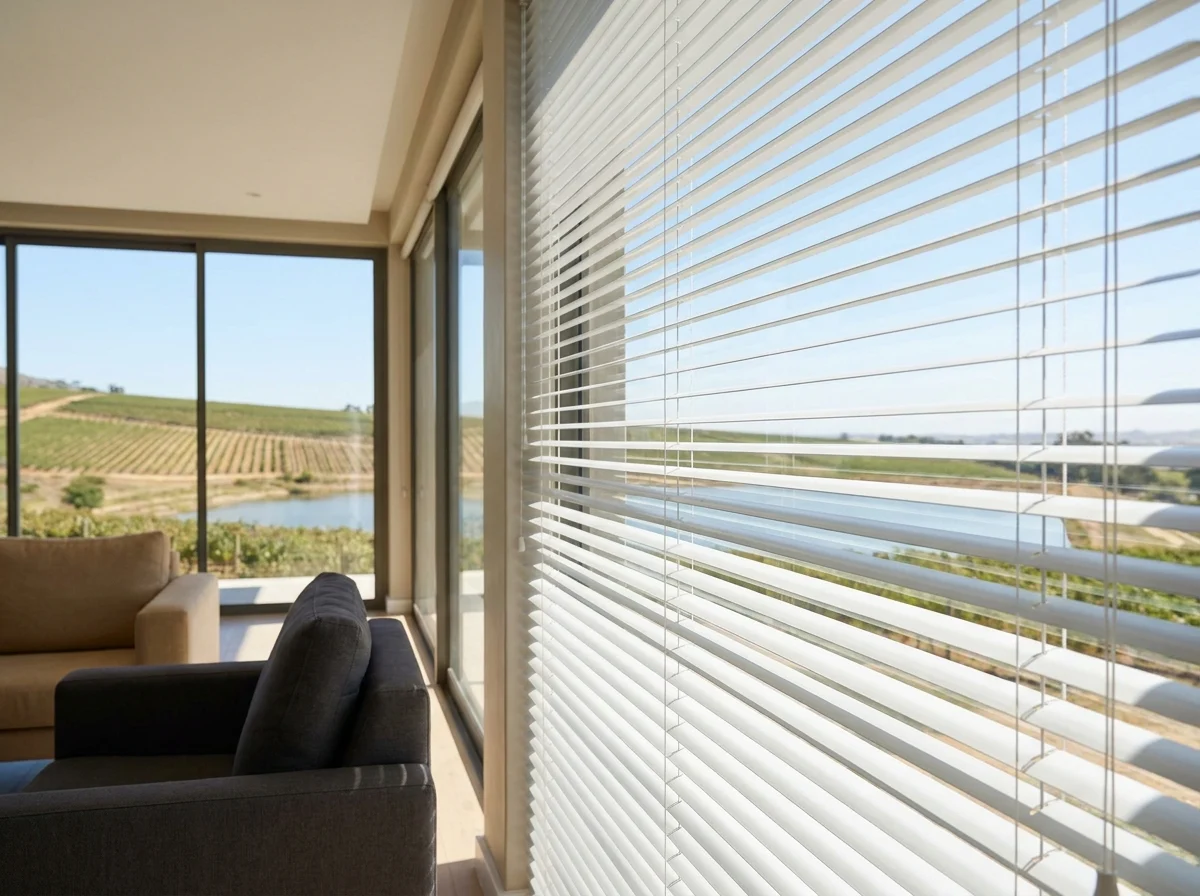
- External venetian shading. Wide aluminium blades outside the glass, tilted or raised through the day. It keeps the heat out like a shutter does, but you still steer the daylight and keep the garden — usually the right answer on a room you actually sit in during the afternoon.
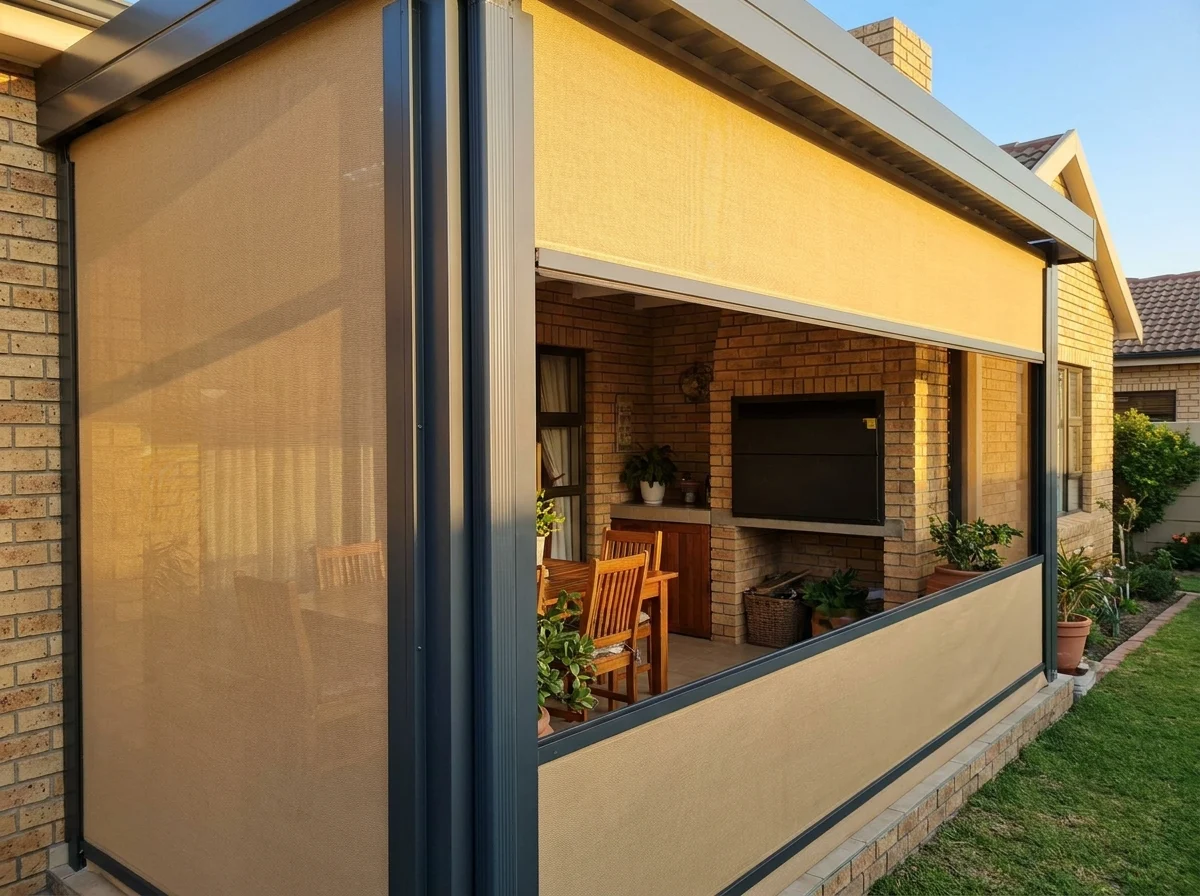
- Zip screens. Mesh tensioned into aluminium channels down both sides. The answer for a covered stoep or braai room rather than a window — and the one that copes best where the wind is the real problem.
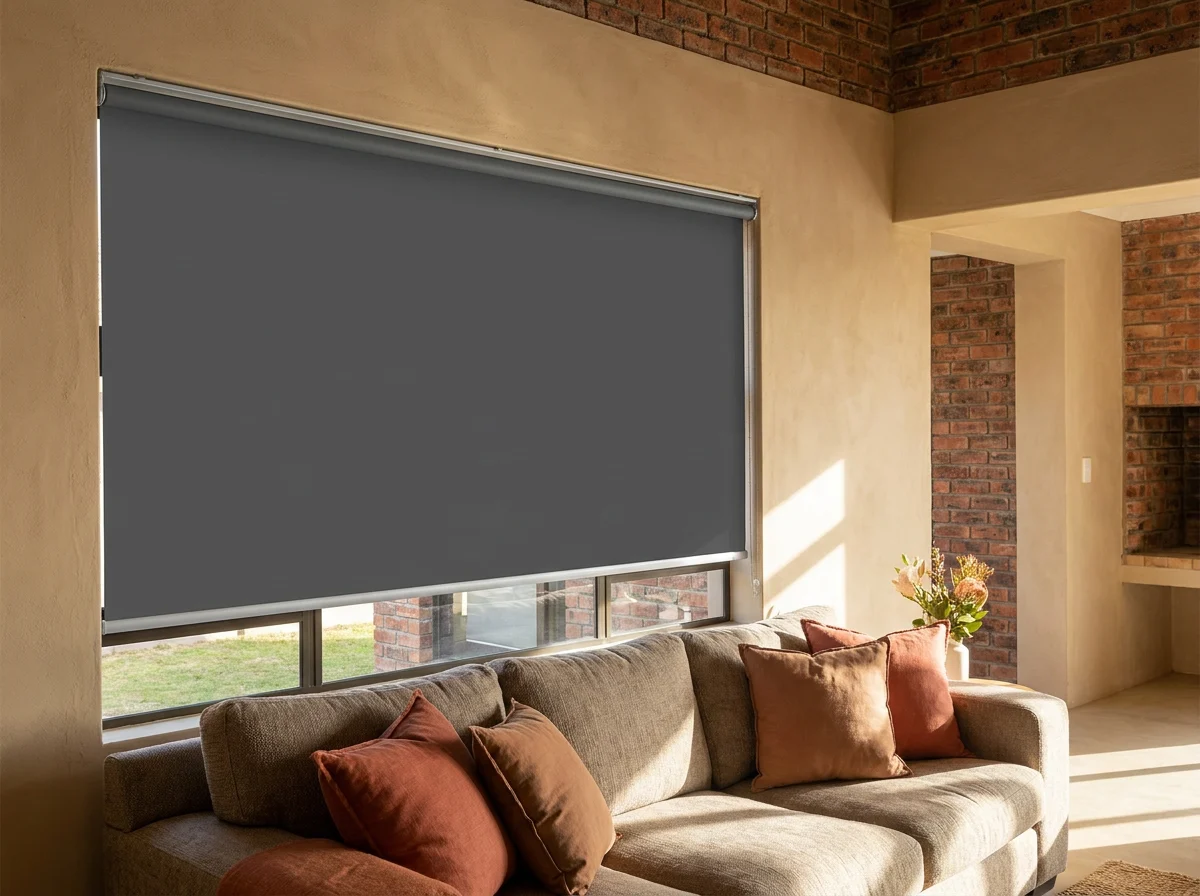
And the honest interior fallback, because not every wall or budget takes an exterior fixing: a tight sunscreen weave, or mesh with a blockout layer behind it on the same tube bracket. A real improvement in a room that is currently unusable. Not the same physics, and we will say so at the measure rather than after.
Room twoThe kitchen and scullery, where the enemy is damp
June and July are the wet, cold months here — around 124 mm of rain between them, with July dropping to about 10 °C and humidity sitting in the high sixties to low seventies through the cooler months.4 A kitchen window over a sink and a scullery with one small opening are exactly where that shows up: condensation, then a slow, quiet argument with your hardware.
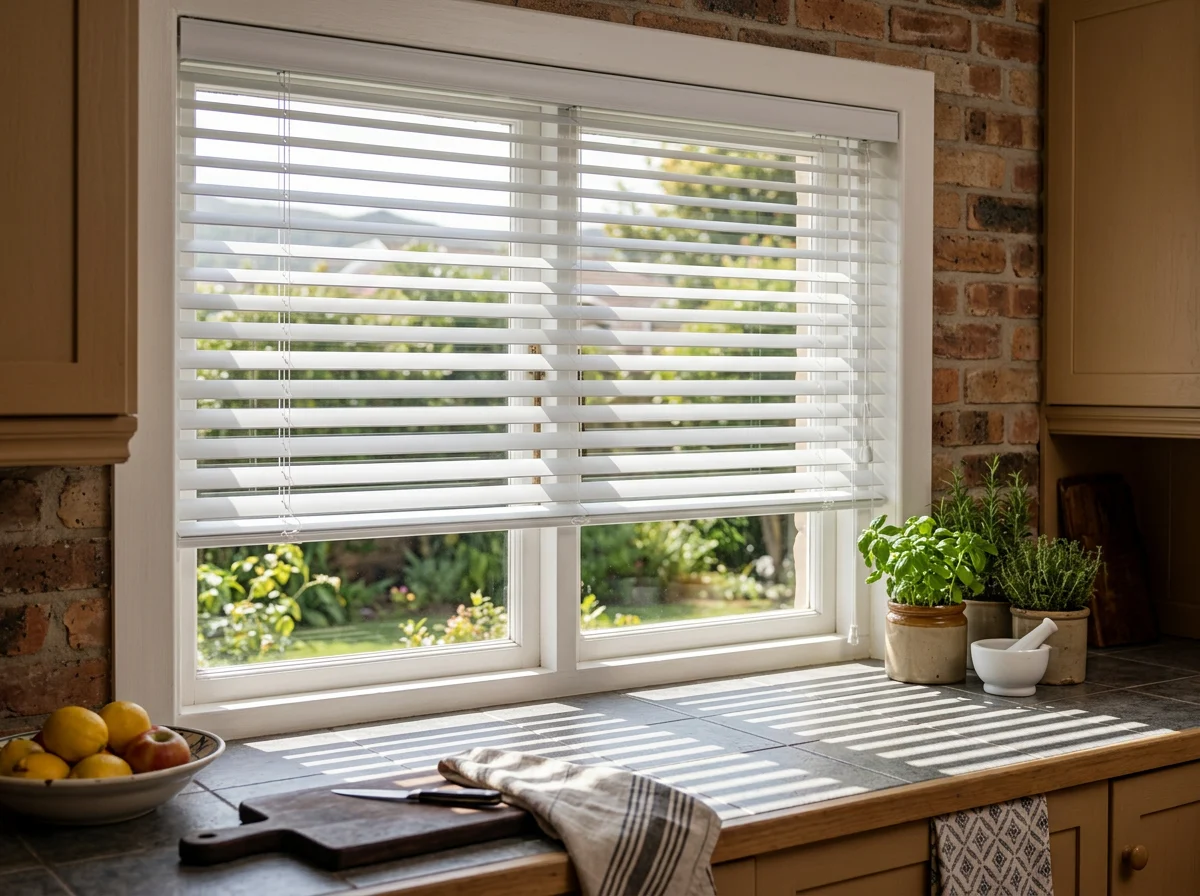
So the rule in these rooms is not about light at all. Aluminium slats, not timber. Sealed aluminium takes the damp and takes a scrub; timber does neither well, and it is a shame to put a beautiful timber blind somewhere it will not last. Timber stays for the dry rooms — a study, a reading corner, a main bedroom — where the grain earns its place.
Kuils River is also 25 km inland,1 which means the salt-corrosion problem that drives specification on the coast simply does not apply here. Winter condensation is the local version of that problem, and it is a much cheaper one to design around.
Room threeThe bedrooms, where it is never the fabric
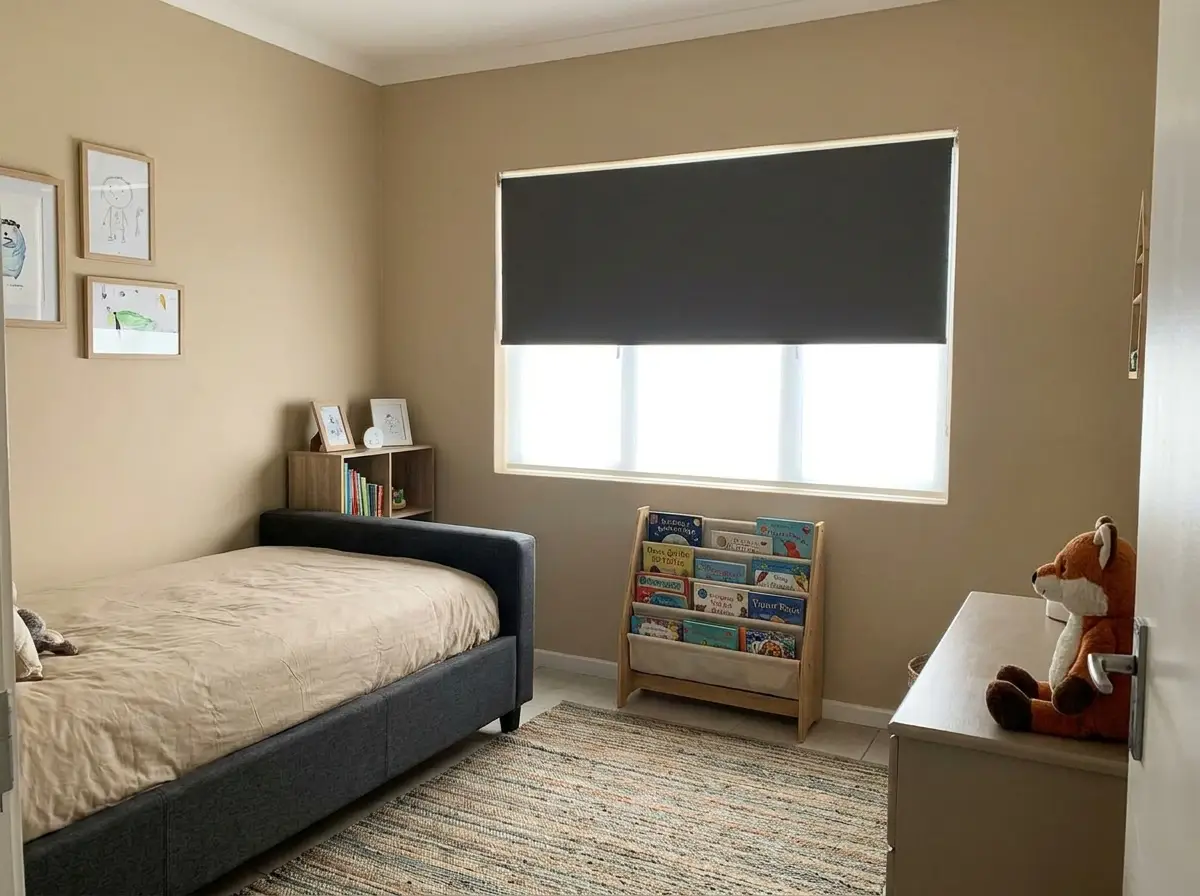
Every blockout fabric is opaque. If it were the fabric, there would be nothing to discuss. What actually wakes people is light coming around the edges of the blind, and that is a fitting decision made at the measure:
- Inside-fit sits neatly within the reveal and looks the tidiest, with a hairline of light down each side.
- Face-fit, mounted over the whole opening, is markedly darker — at the cost of covering the reveal.
- Inside-fit with side channels gets you both, at the cost of one more component.
In a house with small children the control matters as much as the darkness. Chain and cord tensioners go on as standard on anything corded, and in a nursery or a shared room we will steer you toward cordless or motorised instead — nothing dangling within reach beats any tensioner.
Room fourThe one that never gets warm
Most Kuils River houses have one. A south-facing guest room that gets no direct sun for months. A study over the garage. A compact room in a newer cluster with a big window and not much volume to heat.
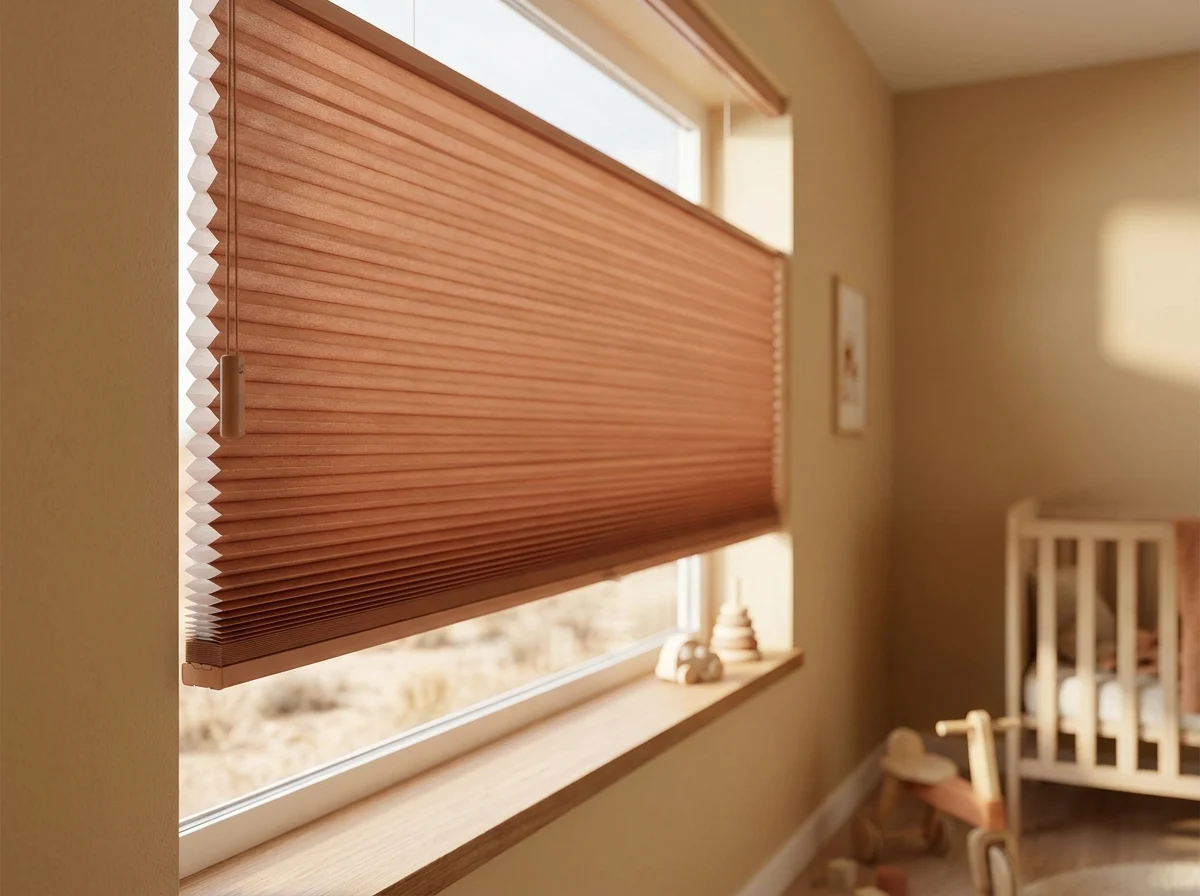
The midwinter noon sun only reaches about 32.6°3 — low, welcome, and completely absent from a south wall. Shading is not the answer in this room; insulation is. A cellular honeycomb blind traps a layer of air in its cells against the glass, and it is that trapped air doing the work. It is the one product on our list bought for temperature rather than light, and it is the right call here.
The same logic argues for restraint on the north side. Low winter sun coming deep into a north-facing living room is free heat. Fit heavy blockout there during a February heatwave and you will have switched it off in July too — which is why we push adjustable products on north glass and save the heavy artillery for the west.
Room fiveThe braai patio, and the wind you have to plan for
Kuils River does its share of outdoor living — a golf club, active bowls and squash clubs, and the Bottelary Hills trails on the doorstep.5 The patio gets used. The south-easter is at its rowdiest from roughly September to May,6 which is precisely the season the patio is in use.
The decision is genuinely between two products, and it turns on what is actually spoiling the space:
- Sun is the problem → a folding-arm awning. It gives shade in summer and folds away to nothing when you want the low winter sun back on the paving.
- Wind is the problem → a zip screen. Mesh held in channels on both sides holds its shape rather than flapping, and turns an open side of a stoep into a room you can sit in.
The rule we do not bend on
If it moves by motor and it lives outside on an open stand, a sensor goes on as standard rather than being offered afterwards as an upgrade. It brings the fabric in ahead of the gust instead of waiting for somebody to be home. Where a wall already shelters the space properly, we will say so and point the money somewhere it does more good.
Room sixThe estate lounge with something worth looking at
Around Zevenwacht and Klein Zevenwacht, and in the newer clusters at Rouxville, Haasendal and Kleine Wingerd, the brief changes shape. These are access-controlled estates bordering the winery, with dam and vineyard views, and the glass is bigger and often floor to ceiling.7
Two things follow. First, the brief has two halves that pull against each other: take the heat out, leave the outlook alone. That is a case for sunscreen mesh on the view glass, with the heavy heat work handed to something outside the pane rather than to a heavier fabric inside it. Second, a new-build hands over with completely bare glass, so window treatments are a day-one purchase rather than a someday one — and estates of this kind normally require sign-off for anything visible from outside the home.
We will not call that approval a formality, and we will not lodge it for you. What we will do is raise it before the quote is written, and provide slimline hardware, colours that disappear against the facade, and the technical detail an application asks for.
The older stock, and why a bracket is not a formality
The settled side of Kuils River — Scottsville with its own station, Amandelrug and Amandelsig, Silver Oaks, Highbury and Elim — is largely 1980s freestanding houses on generous plots, typically 800 to 1,000 m² or more, with aluminium sliding or casement windows since modernised by a second generation of owners.5
Those frames have had forty years to settle. An opening that measures true at the top can be a few millimetres out at the sill, and a bracket that would go straight into a fresh estate wall may need a different fixing here — or a face-fixed cassette over the opening rather than a track forced into a frame that has moved. It is not a problem. It is simply a reason no honest number can be given over the phone.
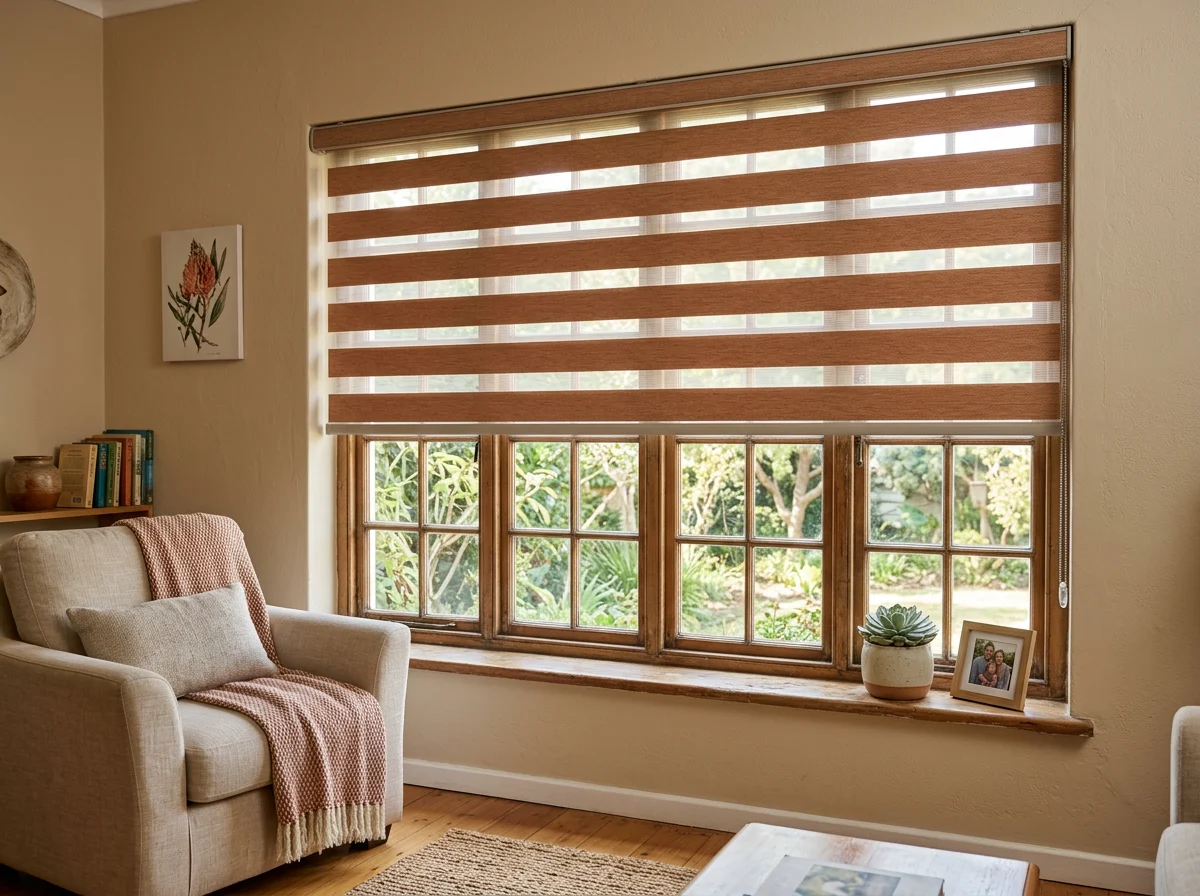
The hills give you a good morning and no help at all after two. Everything we specify here is really about the second half of the day.
On-site measure, Kuils RiverFive things a guide cannot answer for your house
- Which direction each room genuinely faces. Kuils River's older street grids run at every angle, and estate stands were set by a development plan rather than by the sun. Ten seconds with a phone answers it, and the whole of this guide rests on the answer.
- How square the opening really is, head to sill. On a forty-year-old frame that answer decides between a track inside the reveal and a cassette across it — and with it, how dark a bedroom actually goes.
- The wall's construction. Brick, cavity or a later partition decides the fixing — and whether an exterior product is even possible on that elevation.
- How much weather the stand actually catches. A walled courtyard and an open corner plot are different jobs in the same October wind.
- Supply, and sign-off. Is there a point near enough for a motor, can a rechargeable tube be got at, and does an estate hold a view on the outside of the house.
That is why the measure costs nothing. Every one of those five is cheap to establish with a tape in your passage and expensive to establish with a fitted blind on your wall.
Point us at the room you avoid
One visit, every window measured, a written number per opening. Free, and nothing gets ordered until you have read it.
Which room did you stop reading to think about?
That is the one to tell us about. One of our expert consultants will contact you shortly to arrange your free in-home measure.
- A person phones you back — there's no call-centre queue
- The samples travel to your lounge, not the other way around
- Nothing gets ordered until you've read the itemised quote
Sources
Each fact above sits on one of the references below. The sun angles come from Kuils River's latitude by standard solar geometry — the method is spelled out in the text if you want to work it through yourself — rather than lifted from any single page. Unverifiable claims were dropped rather than softened.
- Wikipedia — Kuils River: 25 km east of Cape Town and 20 km west of Stellenbosch at the entrance to the Cape Winelands; a Dutch East India Company refreshment post from 1680, originally De Boss and also called de Kuijlen; a railway station from 1862; municipal status on 4 December 1950; the name taken from the kuile, the pools in the river.
- SA-Venues — Bottelary Hills wine estates: a low range of granite hills on the north-western edge of the Stellenbosch district, lying between Koelenhof, Kuils River and Bottelary, with Kuils River at their foot — that is, the high ground sits to the east of the town.
- Solar altitudes for latitude ≈33.94° S. At solar noon the sun's height is 90° reduced by the difference between the latitude and the declination, which reaches ±23.44° at the solstices: roughly 79.5° in December, 56° at the equinoxes and 32.6° in June. Sense-checked against the Cape Town sun data published by timeanddate.com.
- World Weather Online — Kuils River weather averages: February the hottest month at around 26 °C by day; July and August the coldest at around 10 °C; June and July the wettest at roughly 124 mm across the two months, against about 9 mm in February; humidity near 67–73% through the cooler months.
- Chas Everitt — Kuils River area profile: the established freestanding suburbs of Scottsville, Amandelrug and Amandelsig, Silver Oaks, Highbury and Elim, largely 1980s houses on 800–1,000 m² plots with aluminium sliding or casement windows; the local amenity spine including the golf club, bowls and squash clubs, and the Bottelary Hills mountain-biking trails.
- The south-easter, described by Cape Town Magazine and in Wikipedia's entry on it: the Cape's dominant wind from spring through to autumn, which is the whole outdoor season here.
- Seeff — Zevenwacht Country Estate profile: an access-controlled, 24-hour manned estate bordering the Zevenwacht winery, with dam and vineyard views.
Our recommendations here are opinion, freely offered. They are not an approval: an estate or body corporate that governs exterior appearance holds that decision, and we check it before a quote is written rather than after an order is placed.